Design Phase
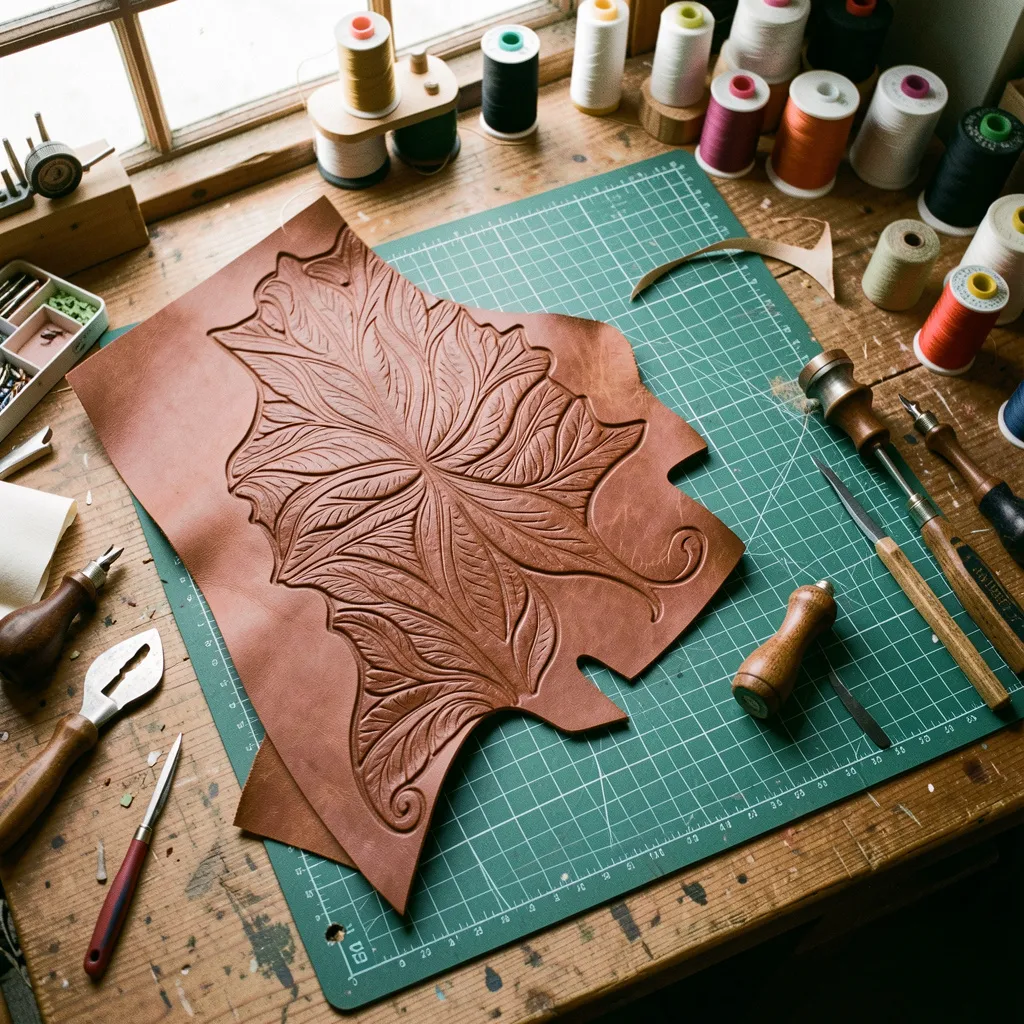
Digital Sketching
Every tooling pattern begins as a digital sketch, allowing for precise geometric planning and symmetry verification. This digital foundation ensures accuracy before any physical work begins. The design is scaled and adjusted to match the intended leather piece dimensions.
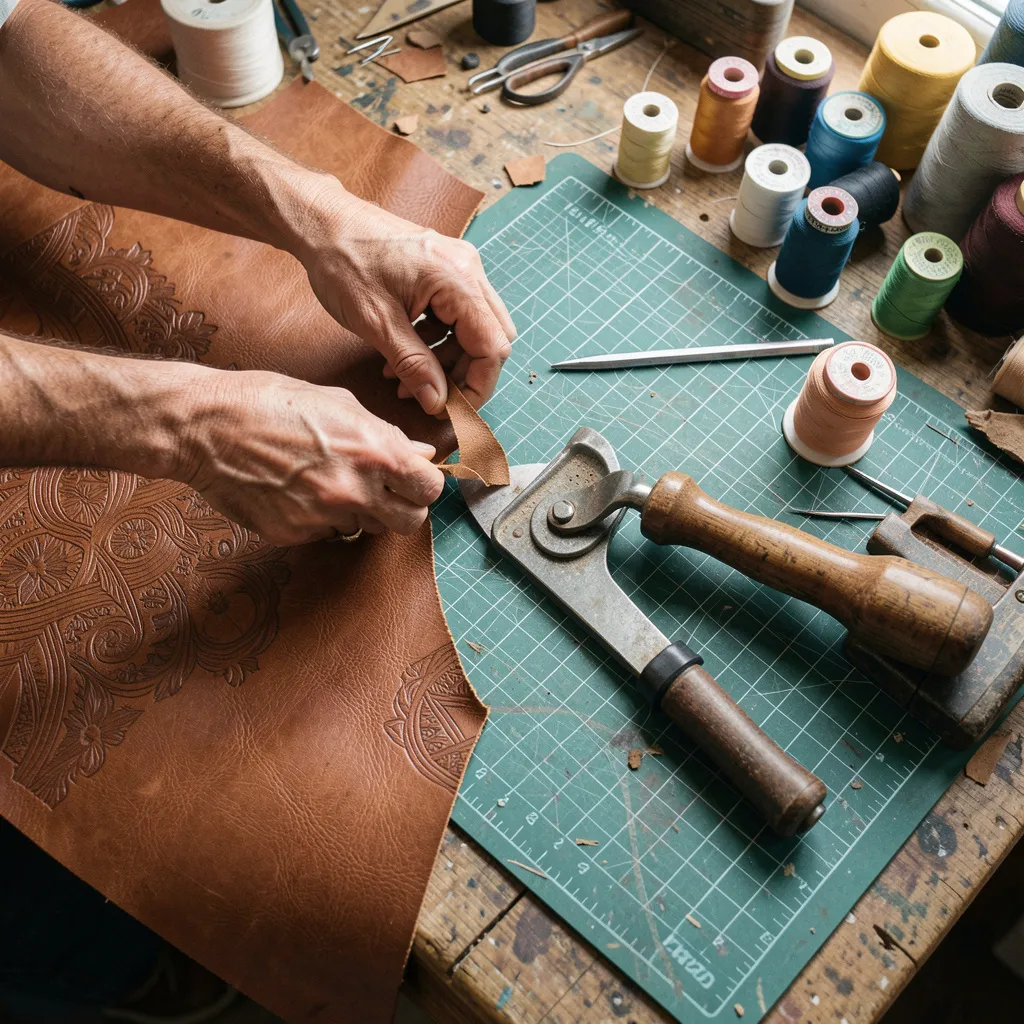
Pattern Transfer
The digital design is transferred to the leather surface using specialized transfer techniques. This process maintains the geometric precision of the original design while adapting to the natural variations in the leather surface. Careful alignment ensures pattern symmetry.
Tooling Execution
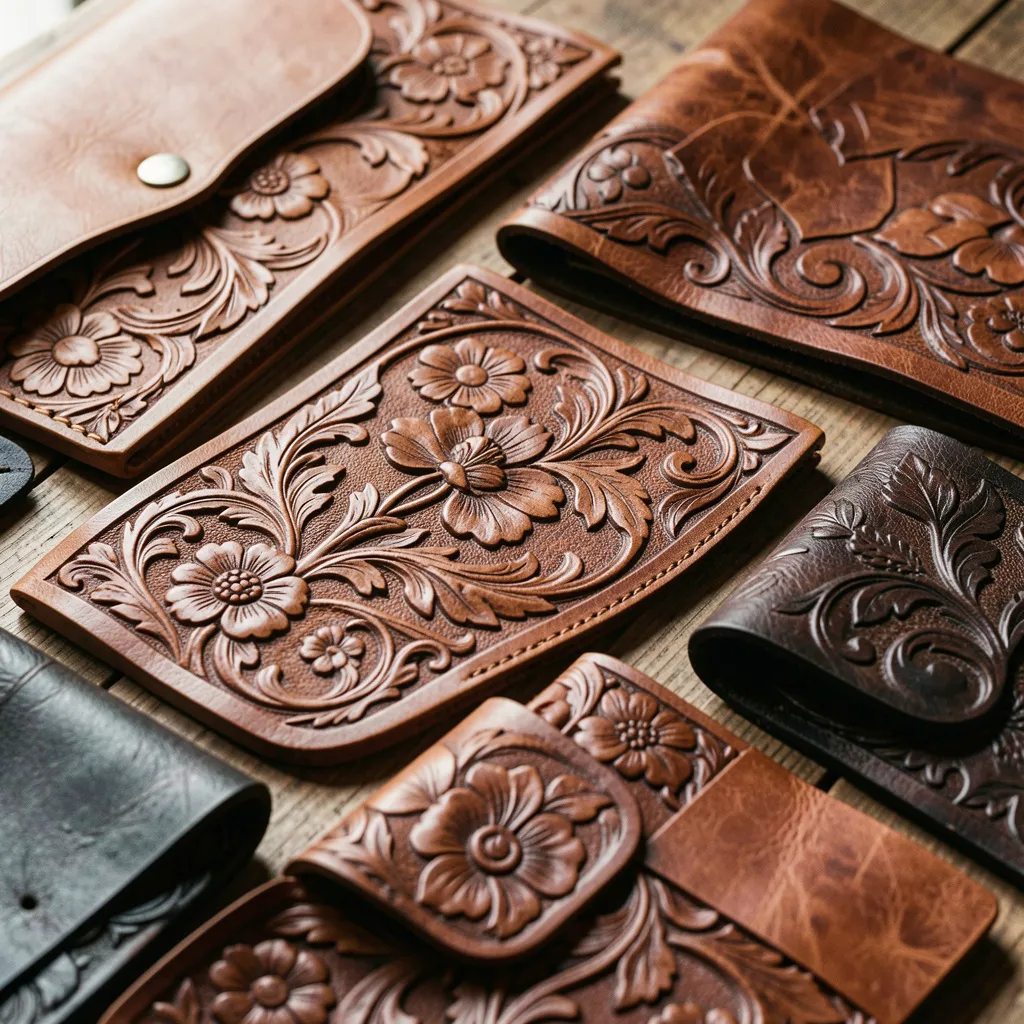
Carving Tools
Specialized carving tools create the initial depth and definition in the leather. Each tool is selected based on the pattern's requirements, with different blade shapes creating varying line weights and depths. The carving process requires consistent pressure and angle control.
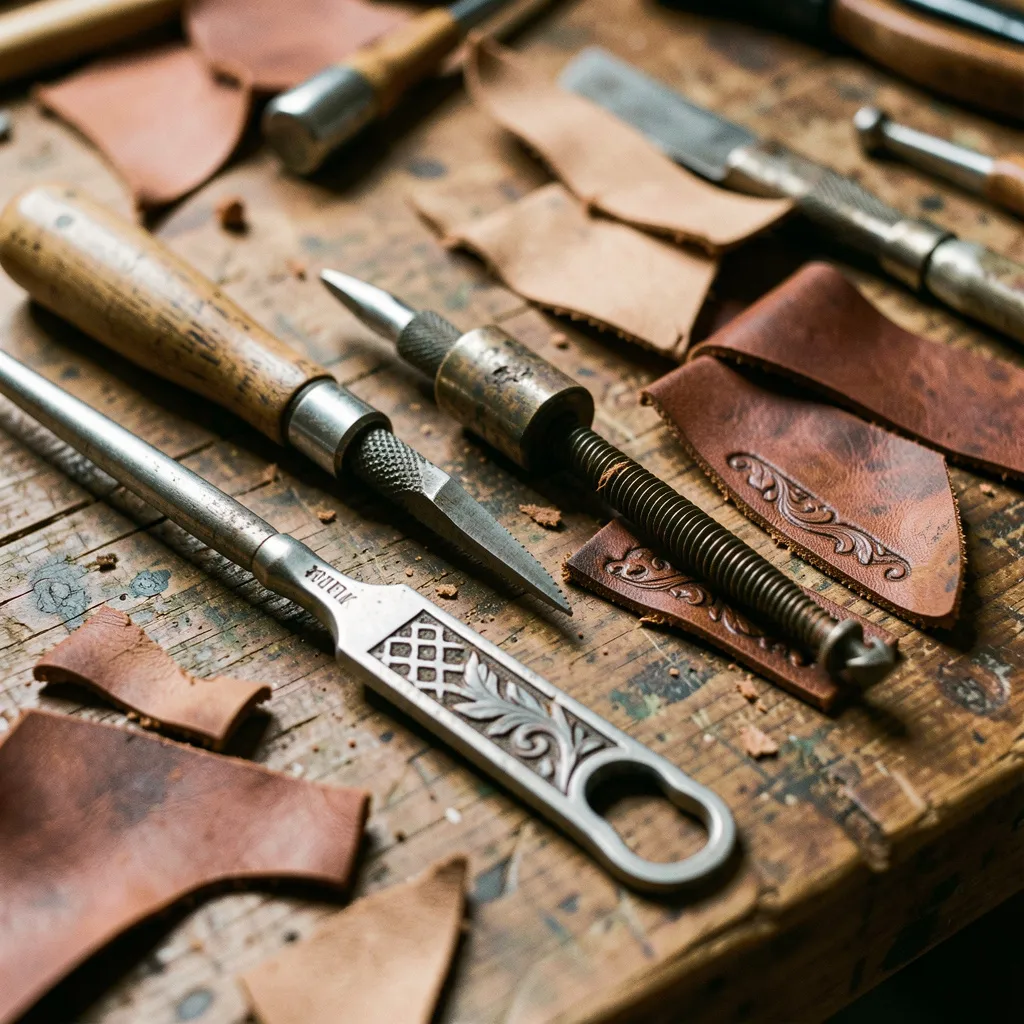
Stamping & Embossing
After carving, stamping tools add texture and detail to the pattern. Each stamp is carefully positioned to create consistent impressions. The embossing process adds three-dimensional depth, transforming the flat pattern into a tactile surface with visual interest.
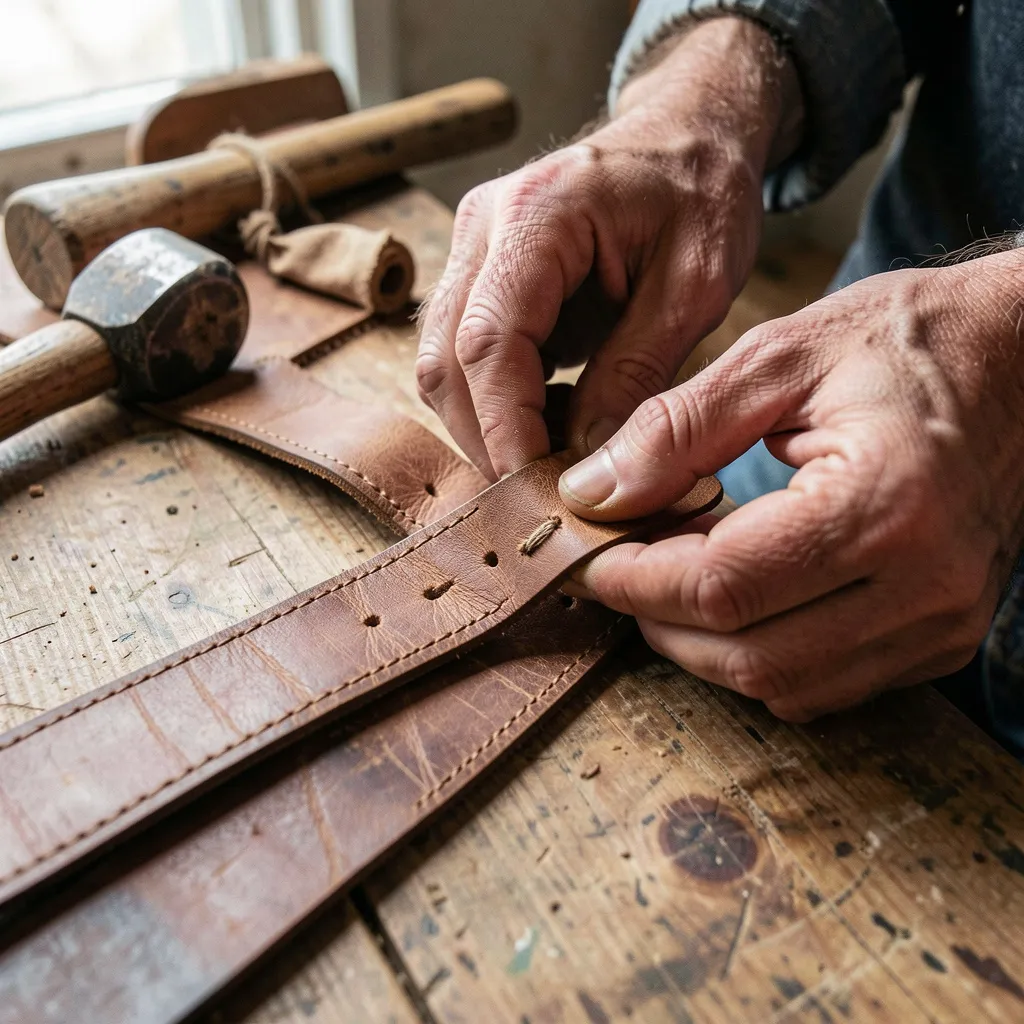
Hand-Hammered Details
The final tooling stage involves hand-hammering to refine edges and add finishing details. This manual process allows for subtle adjustments that enhance the pattern's overall appearance. Each hammer strike is deliberate, contributing to the pattern's final character.
Pattern Geometry
Geometric Principles
Our tooling patterns are based on geometric principles that ensure visual harmony and structural balance. We utilize mathematical ratios and symmetry to create patterns that are both aesthetically pleasing and technically sound. Common geometric bases include:
Radial Symmetry
Patterns that radiate from a central point, creating balanced visual weight distribution.
Linear Patterns
Repeating geometric elements arranged in linear sequences for borders and accents.
Tessellation
Interlocking geometric shapes that create continuous patterns without gaps or overlaps.
Final Result
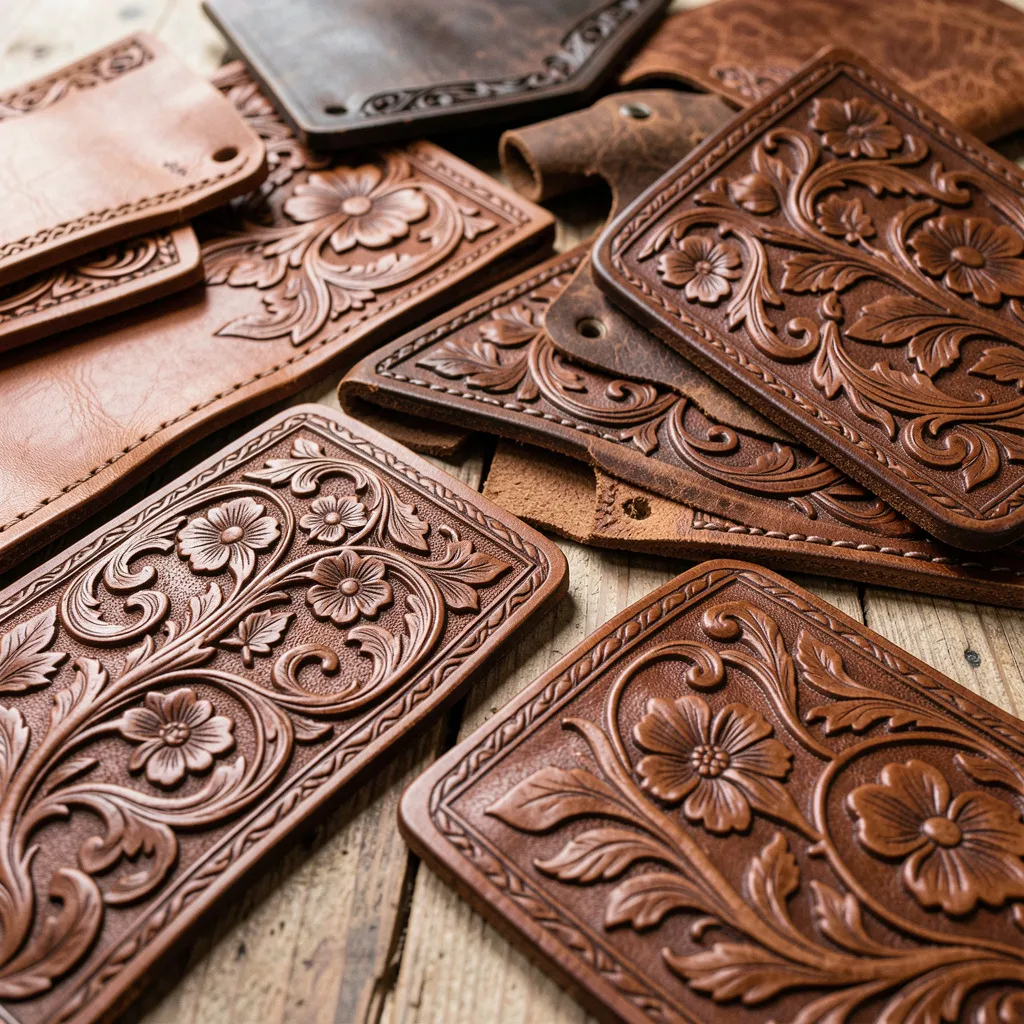
Completed Tooling
The completed tooling pattern represents the culmination of design planning, precise carving, and detailed finishing work. Each pattern is unique, reflecting both the original design intent and the natural characteristics of the leather material. The tooled surface will continue to develop character as the leather ages and patinas over time.